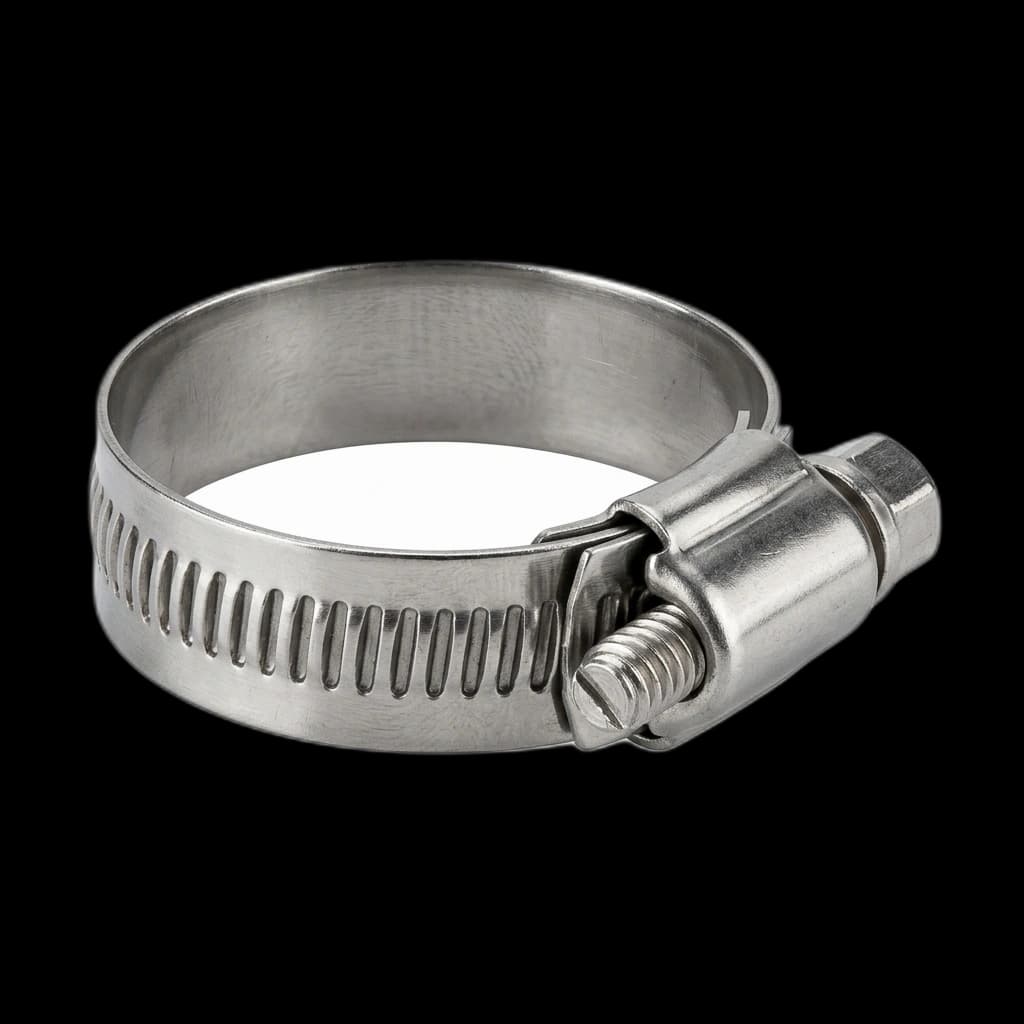
A hose clamp is one of the simplest parts in an installation, right up until the wrong one lets go under pressure or vibration. Choosing between the common types comes down to clamping force, hose diameter, and how corrosive the environment is.
Worm-drive (Jubilee-type) clips
The classic adjustable band-and-screw clip, tightened with a flathead screwdriver or nut driver. It's inexpensive, widely available, and suitable for the vast majority of low-to-medium pressure hose connections — coolant lines, general plumbing, and light industrial hose runs.
T-bolt clamps
T-bolt clamps use a trunnion and bridge design that applies more even clamping force around the full circumference of the hose, and they hold torque better under vibration than a worm-drive clip. They're the standard choice for larger-diameter hose, higher-pressure connections, and turbo or intercooler piping where a worm-drive clip's point-loading can deform the hose.
Material: mild steel vs full stainless
Zinc-plated mild steel clamps are a cost-effective choice for dry, indoor, low-corrosion environments. Full 304 or 316 stainless steel clamps — band, screw, and housing all in stainless, not just the band — are worth the extra cost anywhere the clamp will see moisture, washdown, marine exposure, or outdoor weathering; a stainless band paired with a plated steel screw housing will still corrode at the housing.
Sizing tips
- Choose a clamp whose adjustment range comfortably overlaps your hose's outer diameter — don't run a clamp at the very end of its range.
- Wider bands distribute clamping force more evenly and resist cutting into soft hose material.
- For safety-critical or high-pressure lines, prefer T-bolt clamps over worm-drive.
- On marine or outdoor installations, specify full stainless rather than just a stainless band.
Sabta Trading stocks worm-drive and heavy-duty hose clamps in a range of sizes and materials, ready to ship from Dubai.